Liftline: AI-Powered Gym Equipment Tracking, Queue Management and Predictive Maintenance
An early look at Liftline— SEYSO's upcoming AI operations platform for gym chains and independents. Your workout, uninterrupted. Equipment status in real time, smart member queues, predictive maintenance, and NLP-classified issue reports across three role-based portals.
3
Role portals
Real-time
Equipment status
NLP
Issue triage
Predictive
Maintenance
The frustration no gym has actually solved
Walk into any busy commercial gym at 6 PM on a Tuesday. The squat rack is in use. The cable row is in use. There's no way to know how long the wait is for either. The third cable machine has had a torn handle for two weeks, but the staff aren't sure exactly which one because the report came in as “the broken cable thing”. Members get frustrated. Some leave early. A few cancel their membership three months later, and the gym never connects the dots.
The core of Liftline is dead simple: members can see which equipment is free, join a queue when it isn't, and report problems in seconds.The interesting work is what happens with that data once it's flowing.
Three portals, one platform
Each tier sees what they need to see — nothing more, nothing less. RBAC enforced at the API.
Member app · mobile-first
/app/*Live equipment map. Join-the-queue with notification when it's your turn. Report an issue with a photo and a one-sentence description — Claude triages it on the backend. View your wait history. Get smart alerts like “The squat rack you usually use just freed up.”
Staff dashboard · tablet / desktop
/staff/*Floor view of every equipment status in real time. Triaged issue queue with severity tagging. Cleaning & inspection rounds auto-scheduled by usage intensity rather than fixed timers. Member-frustration alerts when someone has queued unsuccessfully for the same equipment three times this week.
Admin portal · desktop
/portal/*Heatmaps of equipment usage by hour, day, season. Bottleneck detection on the floor plan. Retention-risk dashboard correlating visit-frequency drops with equipment availability. Procurement insights: “You need two more cable machines — here's the data.”
What it actually looks like
Three role-based portals running against a seeded gym — not Figma mockups. Below is a two-minute walkthrough captured from staging, followed by a couple of representative screens.
~23 MB · MP4 · tap to play
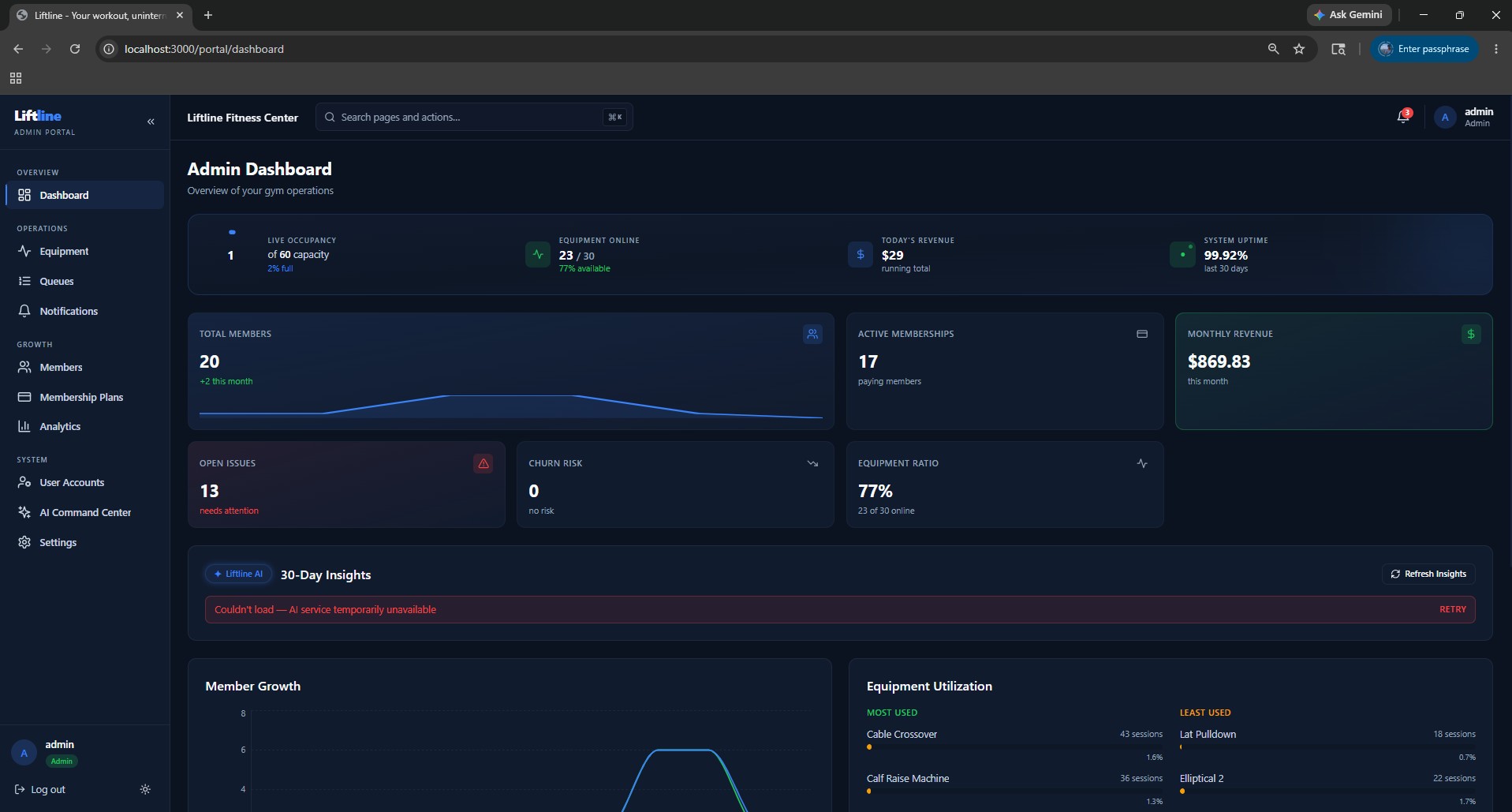
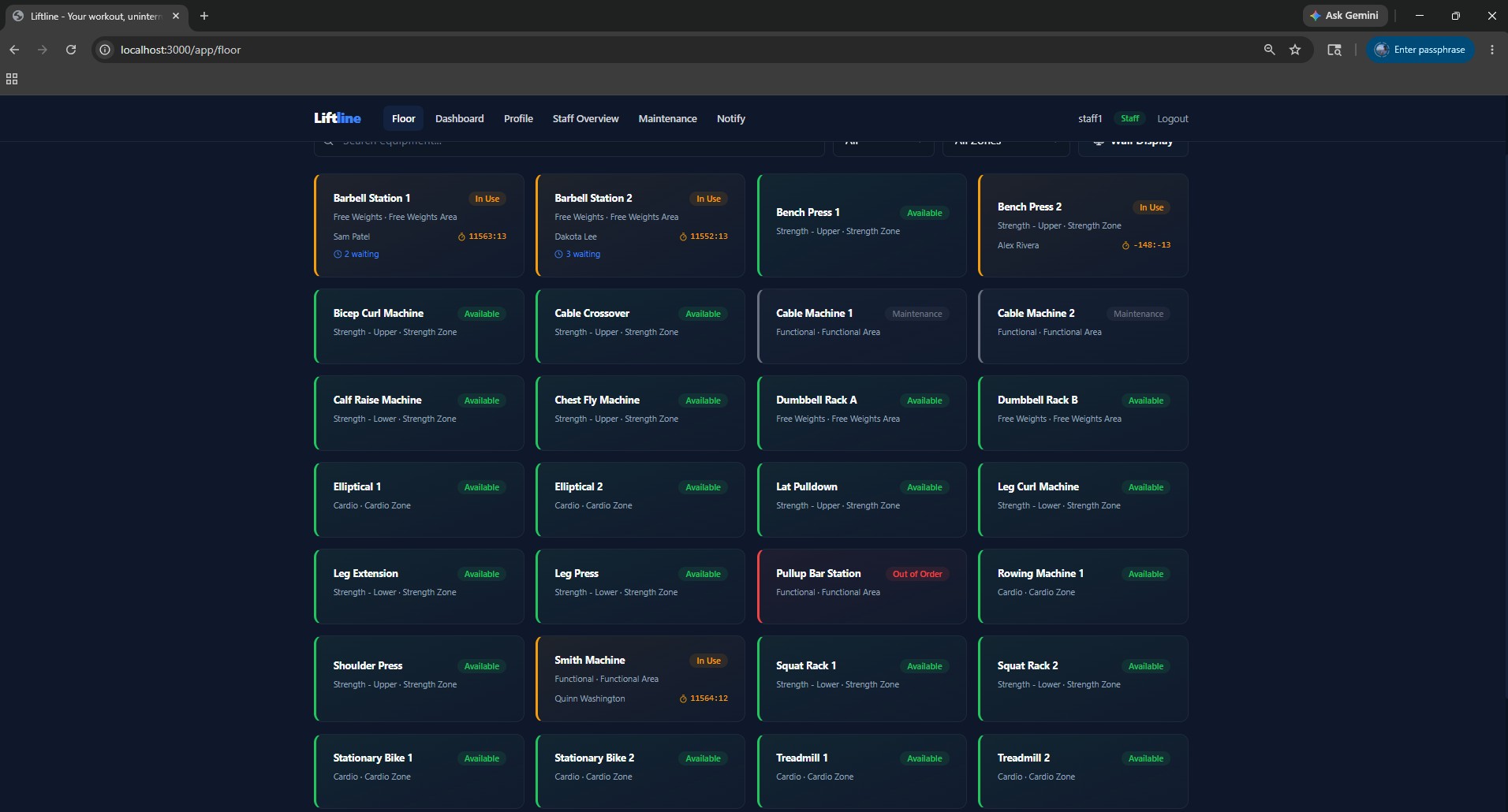
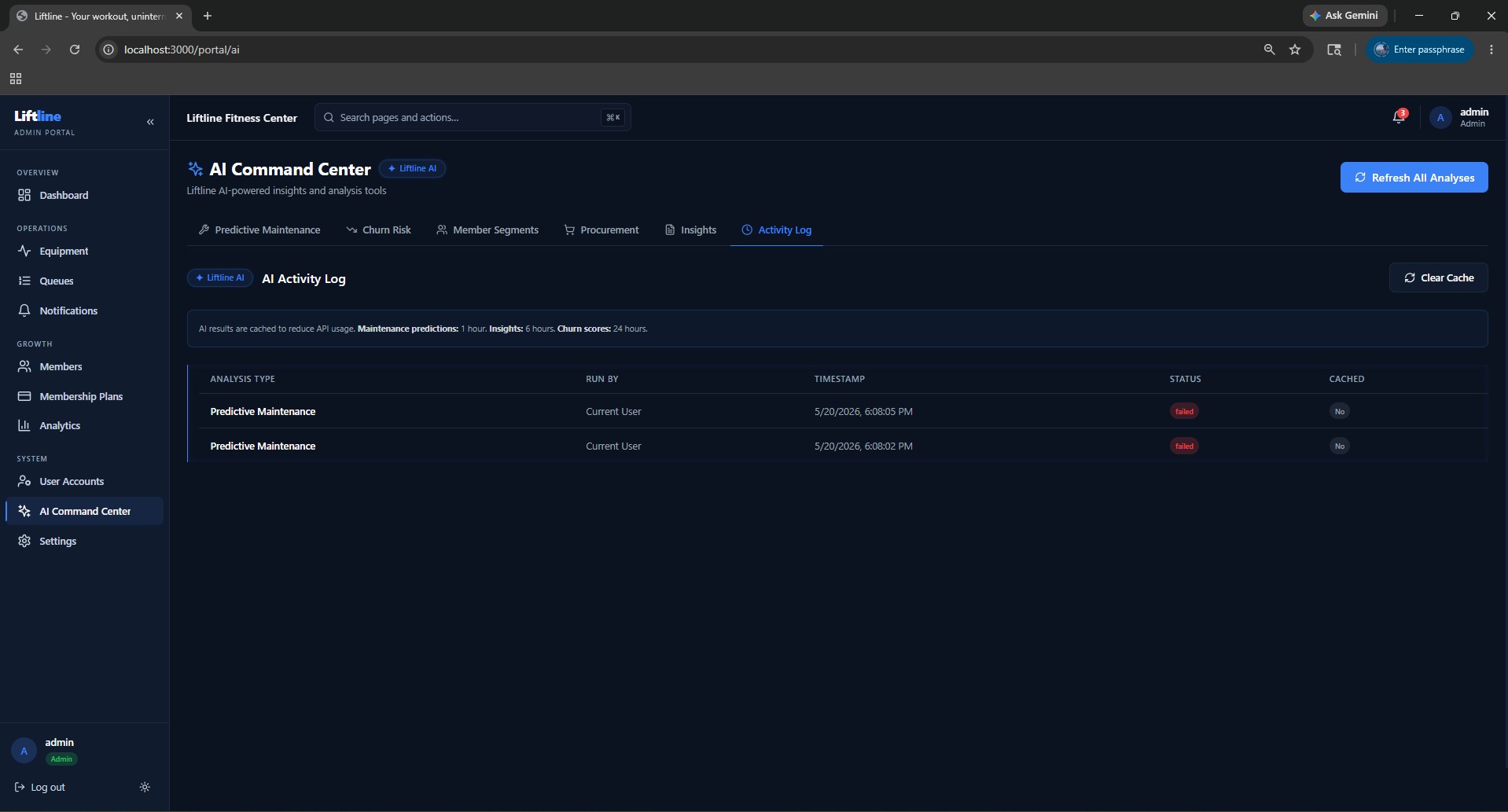
Dark theme shown · light theme available · branding white-labelled per gym
Where the AI actually earns its place
We resisted the urge to bolt AI onto every feature. These are the eight slots where Claude does work nothing else does well:
- Wait-time prediction. Forecast queue length per machine using historical usage patterns and current gym traffic.
- Equipment substitution recommendations. When the cable row is busy: “The seated row is free and targets the same muscles.”
- Predictive maintenance. Analyze the issue-report stream to predict failures before they happen and prioritize tickets by severity and usage frequency.
- Issue-report classification. NLP on free-text reports to classify by problem type, detect duplicates, and flag safety-critical items for immediate escalation.
- Adaptive workout plans. Dynamically reroute a member's planned session around unavailable equipment in real time.
- Bottleneck detection. Sensor + queue data surfaces floor-layout congestion patterns.
- Frustration signal detection. Repeated unsuccessful queues for the same equipment → proactive offer of an off-peak alternative.
- Churn-risk identification. Visit-frequency drops correlated with equipment unavailability events.
We're shipping wait-time prediction and predictive maintenance first — both have direct impact on the two metrics gyms actually care about: member satisfaction and operational cost.
Stack
- Frontend: Next.js 14 (App Router) + TypeScript + Tailwind CSS — one codebase, three role-based experiences.
- Backend: Node.js + Express + TypeScript with Auth, RBAC, audit-logging and rate-limiting middleware.
- Database: PostgreSQL 16.
- Realtime: Socket.io — equipment status updates push to every connected client in <100 ms.
- Cache: Redis — hot-path queue state and wait-time predictions.
- AI: Anthropic Claude API for NLP triage, predictions and the adaptive workout planner.
- Email: Nodemailer with MailHog for dev parity.
Everything containerised via docker-compose for local development; production runs on the customer's cloud (AWS, GCP or Azure — your call) with the database, Redis and Socket.io behind their VPC.
Architecture, in one diagram
┌─────────────────────────────────────────────────────┐
│                  Next.js Frontend                    │
│  ┌──────────┐  ┌──────────────┐  ┌───────────────┐   │
│  │ Member   │  │    Staff     │  │  Admin Portal │   │
│  │ App /app │  │ Dash /staff  │  │    /portal    │   │
│  └────┬─────┘  └──────┬───────┘  └───────┬───────┘   │
└───────┼────────────────┼──────────────────┼──────────┘
        ▼                ▼                  ▼
┌─────────────────────────────────────────────────────┐
│              Express API + Socket.io                 │
│  ┌────────┐ ┌────────┐ ┌────────┐ ┌──────────────┐   │
│  │  Auth  │ │  RBAC  │ │ Audit  │ │ Rate Limiter │   │
│  └────────┘ └────────┘ └────────┘ └──────────────┘   │
│  ┌──────────────────────────────────────────────┐    │
│  │           AI Service · Claude API             │    │
│  └──────────────────────────────────────────────┘    │
└──────────┬───────────────────────────┬───────────────┘
           ▼                           ▼
     ┌──────────┐               ┌──────────┐
     │PostgreSQL│               │  Redis   │
     │    16    │               │  cache   │
     └──────────┘               └──────────┘
Where we are, where we're going
Liftline is in private development as a SEYSO-built product. The three-portal application shell, real-time equipment status, queue management, and the NLP-classified issue-report pipeline are working in our dev environment. Predictive maintenance and wait-time prediction are next on the build path.
We're actively talking to gym chains and independent operators about a small set of charter-pilot deployments— installed in your venue under a co-design arrangement, free of build cost, with the trade-off being your operational data trains the platform's defaults. If that's interesting, get in touch below.
Why this is the right time
The fitness industry rebuilt itself between 2020 and 2024. Member expectations are now set by software — class-booking apps, smart-strength devices, wearables — but the core operational layer of most gyms is still a clipboard. Liftline is the operational layer that respects how members actually behave on the floor, and gives owners the data to make non-emotional decisions about staffing, layout and procurement.
Want a Liftline pilot at your gym?
We're selecting a small group of charter operators to install Liftline ahead of public launch. If your venue has recurring equipment-availability complaints, growing maintenance backlogs, or churn that you can't fully explain, there's a strong chance we can help.